
Insight No.38 |
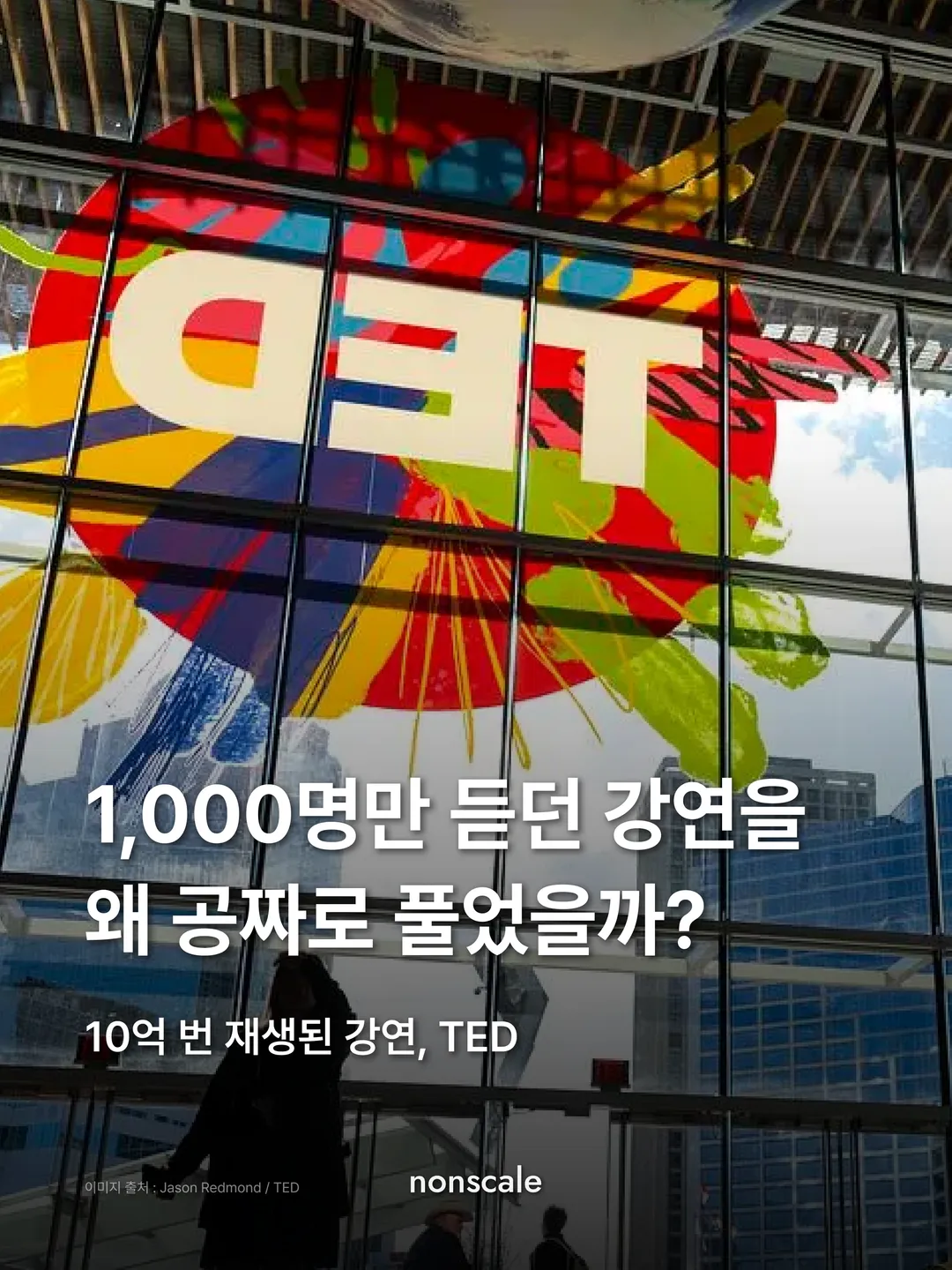
Why give away for free the talks only 1,000 people used to hear?
TED, the talks played a billion times
TED put its talks on the internet even after hearing that giving them away would be the end of it 🎤TED ( @ted )
Founded in 1984, TED was, until 2006, a gathering of 1,000 people a year. However good a talk was, only the people sitting in that audience could hear it. TED’s official blog described this as “an experience limited to 1,000 people”.
When the idea of putting talks online came up, people outside said it would fail, and voices inside warned it could bring TED down. Even so, TED decided to let anyone watch its talks for free.
In June 2006, the first six talks went online. Without a ticket, without having been there, anyone could watch them. In April 2007, TED.com relaunched under the banner “Ideas worth spreading”, opening the way for talks to be translated into 115 languages.
In September 2006, TED talks passed one million views, just three months after the first talks were posted. In the fall of 2012, views reached one billion.
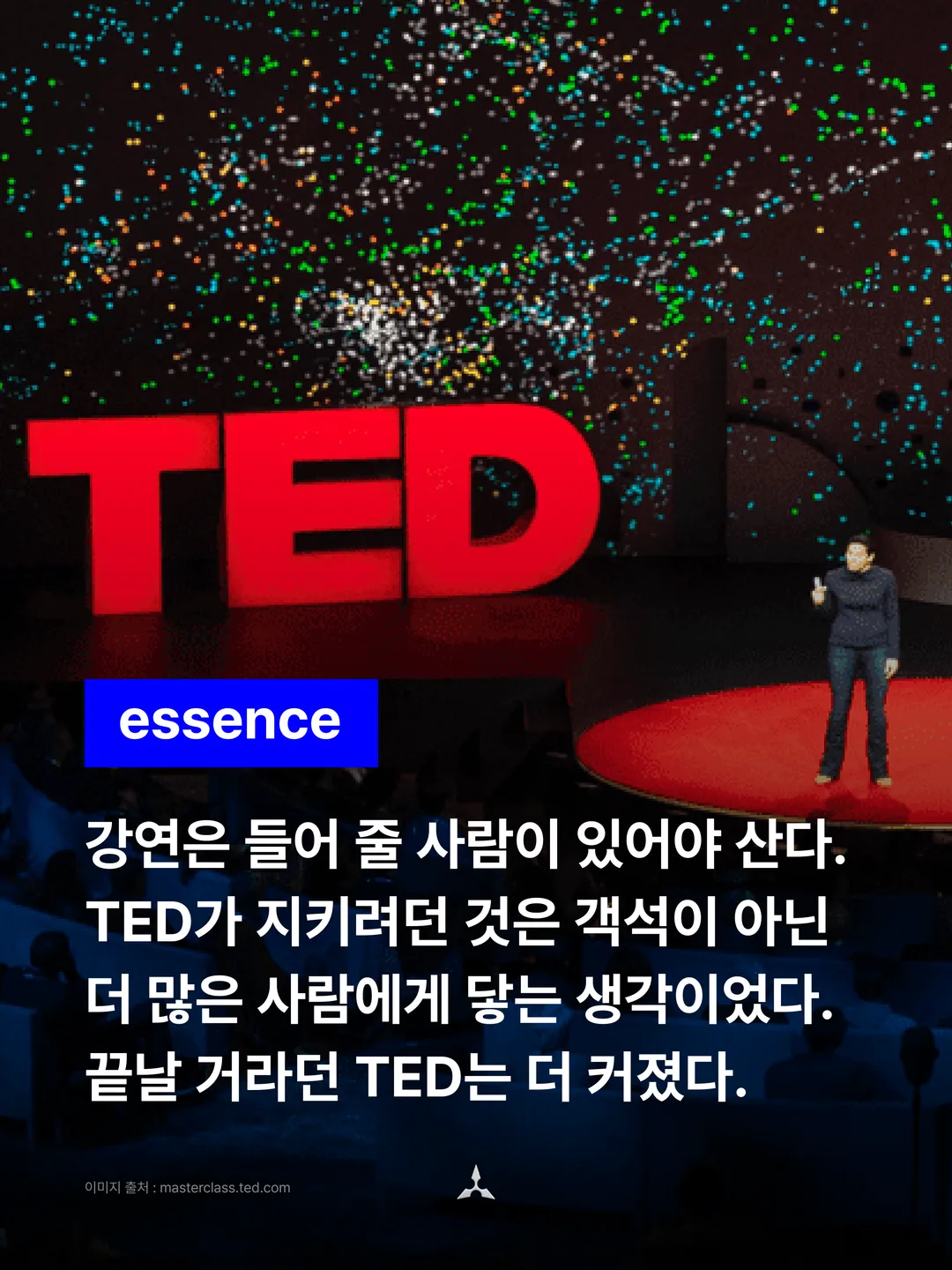
Talks live only when someone is there to hear them.
What TED set out to protect was not the audience in the room
but ideas that reach more people.
TED, which was supposed to end, only grew bigger.
essence
talks live only when someone is there to hear them.what ted set out to protect was not the audience in the roombut ideas that reach more people.ted, which was supposed to end, only grew bigger.
what's your nonscale?
In 2006, TED put talks that only 1,000 people a year used to hear on the internet for free. Which TED talk do you treasure most? 🎤
#TED #테드 #TED강연 · Where it happened: Monterey, California
3 references · photo credits
- TED Blog, 「Throwback TED: Happy 8th anniversary」 (2014)
- TED Blog, 「TED reaches its billionth video view!」 (2012)
- TED, History of TED — ted.com/pages/16
Photo credits · 01 Jason Redmond / TED · 02 Melissa Mahoney / Wikimedia Commons (CC BY-SA 3.0) · 03 Sachi Gahan / Wikimedia Commons (CC BY-SA 2.0) · 04 Steve Jurvetson / Wikimedia Commons (CC BY 2.0) · 05 Stefan Schäfer, Lich / Wikimedia Commons (CC BY-SA 3.0) · 06 Sue Gardner / Wikimedia Commons (CC BY-SA 3.0) · 07 masterclass.ted.com · 08 ARTO SURAJ / Unplash · 09 blog.ted.com