
Insight No.12 |
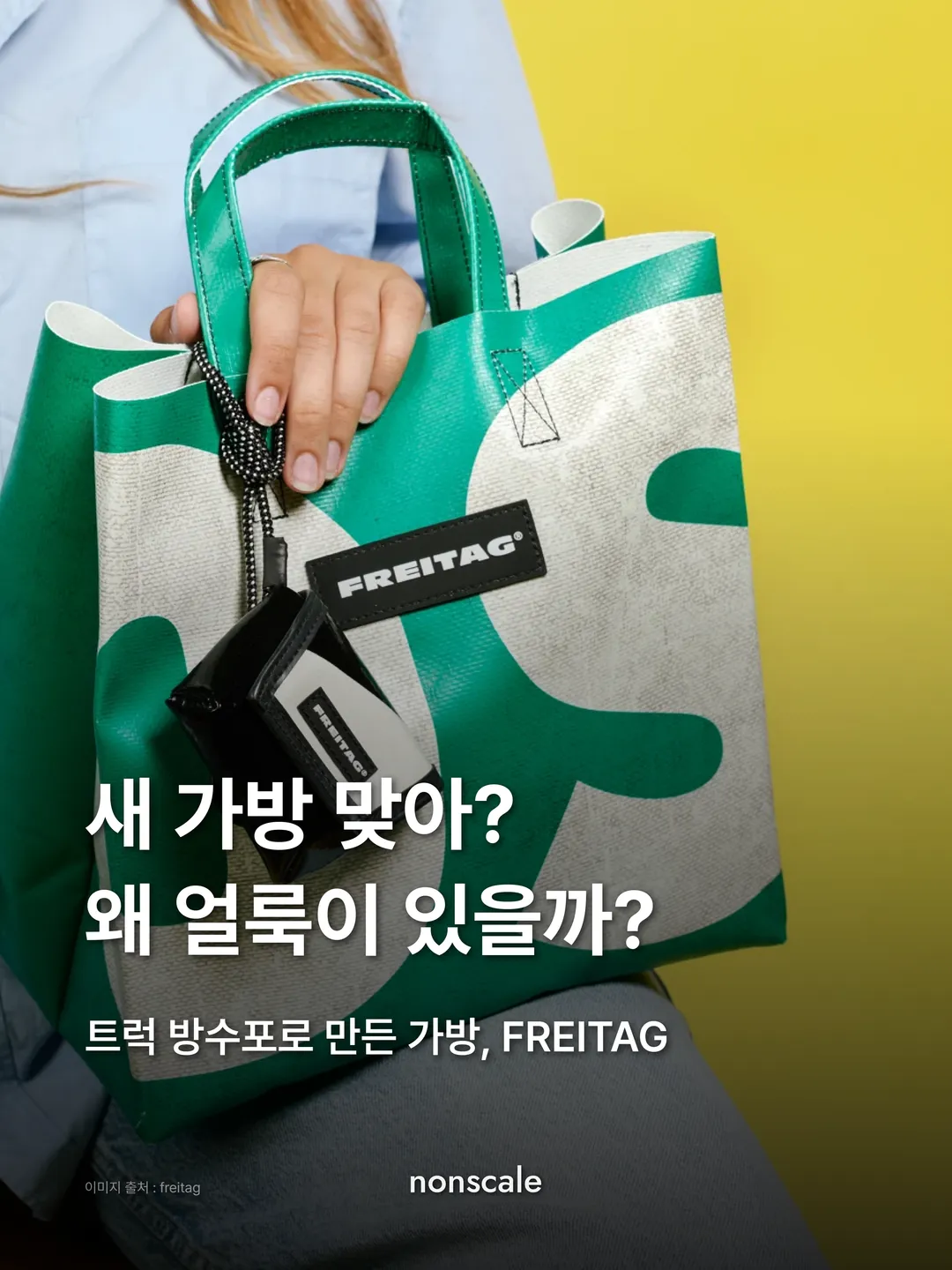
Is this a new bag? Why is it stained?
Bags made from truck tarps, FREITAG
No two bags in a FREITAG store are the same. 🎒FREITAG (@freitaglab)
A bag's pattern comes printed from a factory. New fabric is woven, the pattern is printed, and thousands of pieces are cut from one template. That is how thousands of identical bags are made and the price comes down. Among thousands of identical bags, stains and scratches are defects to be sorted out. Bags that keep out rain are made the same way, with waterproofing applied to new fabric.
Zurich, 1993. Two brothers, both graphic designers, rode bicycles and needed a bag that would keep their paper designs dry on rainy days. Outside the window, trucks on the highway drove through the rain covered in tarpaulins. They brought home their first tarp on a bicycle trailer and cut it with carpet scissors. The thick fabric broke two home sewing machines, so they borrowed one from a furniture workshop to stitch the first bag. The shoulder strap was an old car seat belt; the edging was a bicycle inner tube.
Today those tarps arrive after an average of six years on trucks. The company buys tarps that European transport companies and advertisers have retired, paying by the usable weight. Five people find them by photographing trucks on the road and making phone calls. Tarps that are too dry or cracked are rejected; stains and lettering are left as they are. Half the water used for washing at the Zurich factory is rainwater collected from the roof.
A transparent template cut in the shape of the bag is laid on the washed tarp. On each tarp, a person moves the template around and decides where to cut. They look at where the lettering will land and how many bags one sheet will yield. The trucking company printed the letters and colors; the road left the stains. The cut pieces are sewn in factories in Portugal, the Czech Republic and Bulgaria.
Friends asked for one of the bags the brothers had made for themselves. The younger brother, who lived in San Francisco, first had bike messengers there try them. The first shop only opened in 1999, in the ski town of Davos. When the online shop opened in 2000, orders came from abroad.
Even from the same tarp, a different cut makes a different bag. So every bag is photographed on its own and sold by that photo. The roughly 4,000 bags in the online store each have their own photo. There are 60 models, named with numbers like F13. What you choose is a single photo.
In 2003, the Museum of Modern Art in New York added the first model, the F13, to its collection. In 2006, beside an overpass in Zurich, 19 containers once used in the port of Hamburg were brought in by train and stacked. Four floors hold 1,600 bags, and the top is a 26 m observation deck. From there you can see trucks covered in tarps going by. In 2019 a store opened in Apgujeong, Seoul; today there are 30 stores in 25 countries. At the Zurich factory, 230 people wash and cut 270 tonnes of tarp every year.
Worth adding: the tarp bonds PVC and polyester together, so once a bag is worn out it cannot be separated again. The company has written this down itself, and so it developed a new tarp that can be separated, testing it on trucks since 2022.
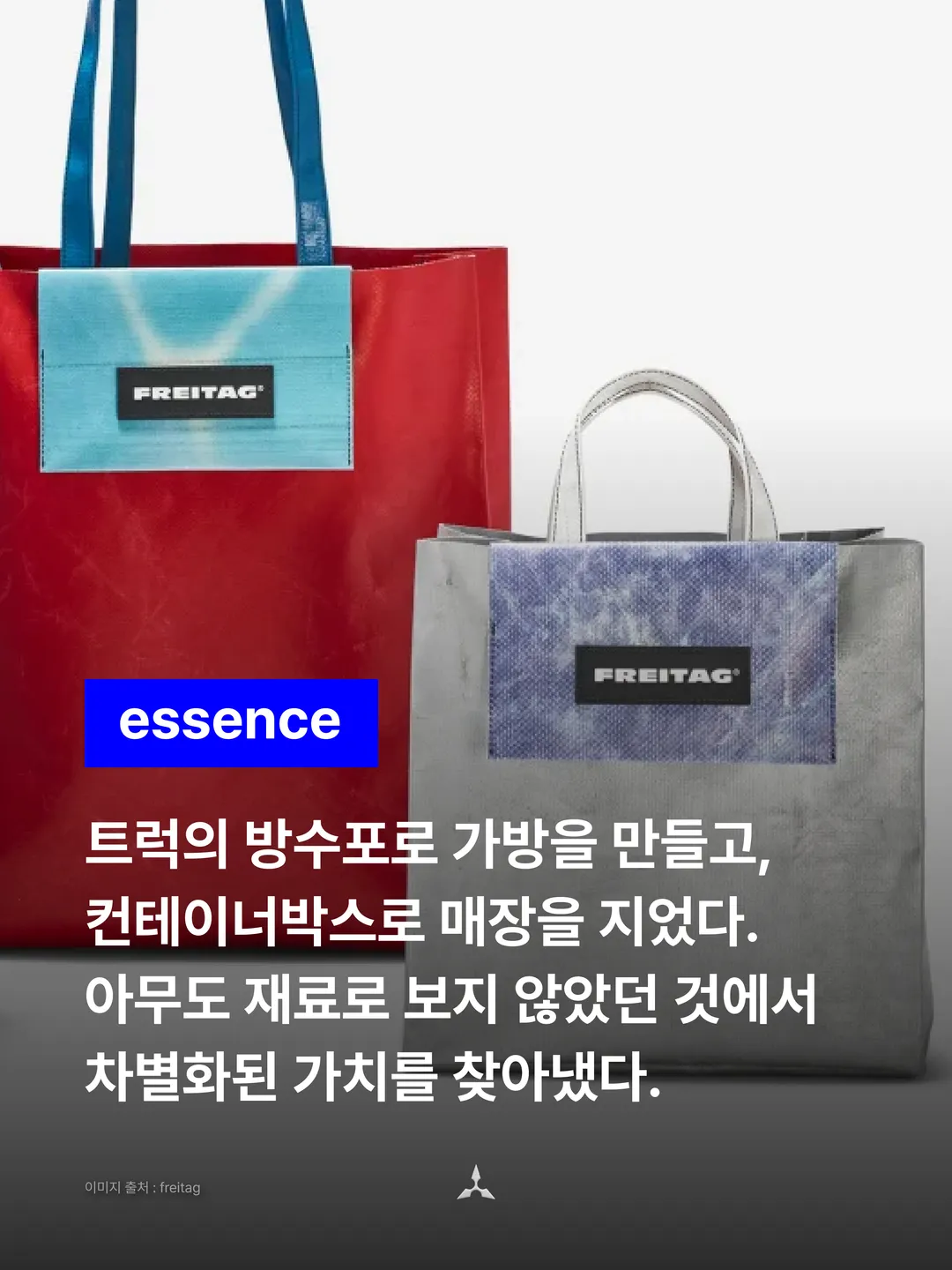
It made bags from truck tarps and built a store from shipping containers.
From what no one saw as material, it found distinct value.
What is passing by outside your window right now?
essence
It made bags from truck tarpsand built a store from shipping containers.From what no one saw as material,it found distinct value.
what's your nonscale?
No two bags in a FREITAG store are the same, and the new bags come with stains 🙄
#Freitag #프라이탁 #가방 #패션 · Where it happened: FREITAG-Flagship Store Zürich
0 references · photo credits
Photo credits · 01·02·03·04·05·06·07·08·09·10 freitag