
Insight No.11 |
It doesn't lead trends, it follows them fast
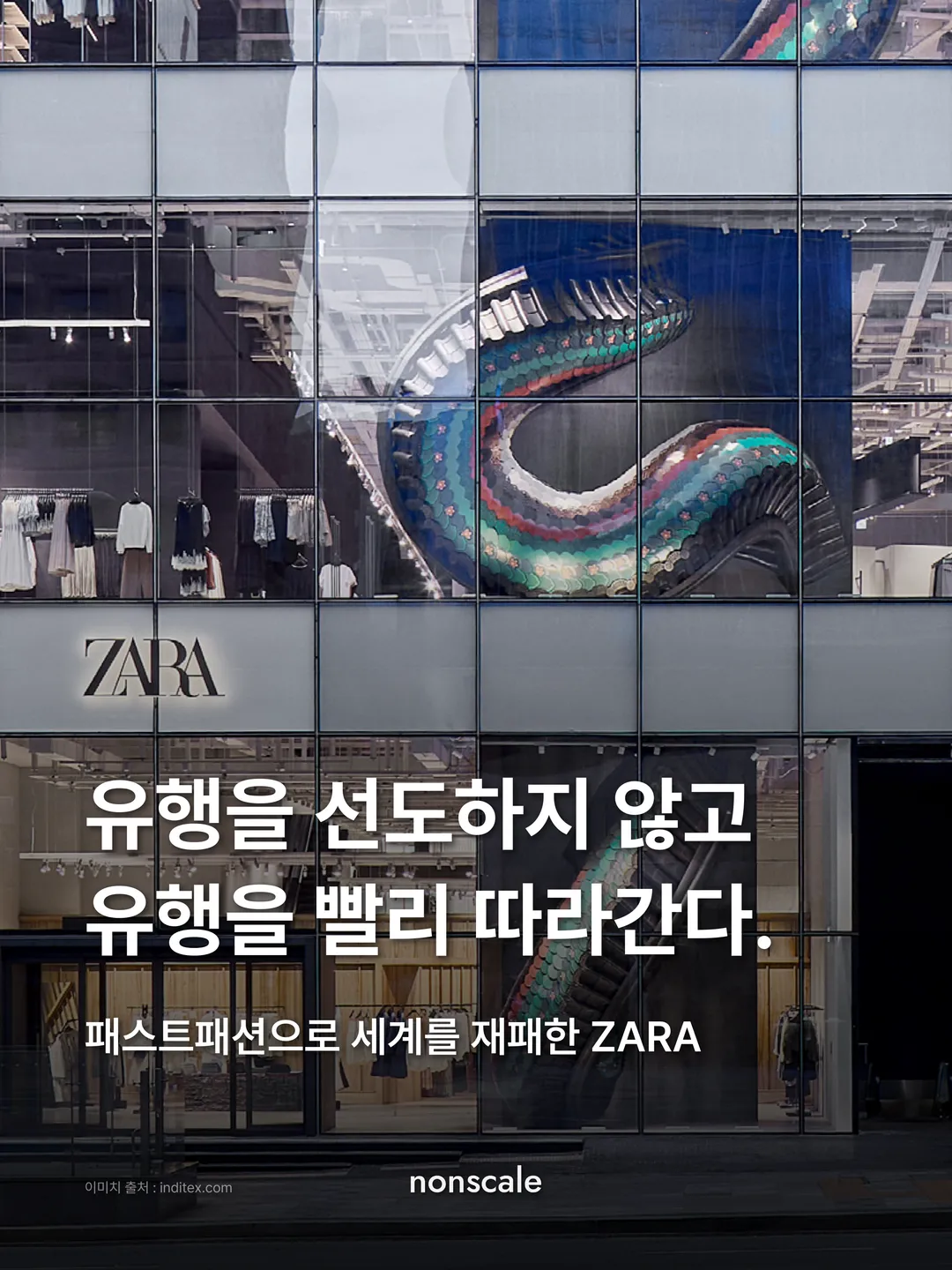
The brand that conquered the world with fast fashion, ZARA
A garment that used to take six months reaches Zara's stores in two weeks ⏱️Zara (@zara)
Amancio Ortega left school at 14 and became a delivery boy for a shirt shop. In 1963 he founded a small garment company in A Coruña, a port city in northwestern Spain, making quilted robes and selling them to wholesalers. For 12 years he made clothes to other people's orders. Then a German client canceled a large order, and the clothes were left in the warehouse. In May 1975, he opened a shop himself to sell them. He meant to call it Zorba, after the film Zorba the Greek, but a bar two blocks away had the same name, so he changed the letters and it became Zara.
The usual clothing business predicts trends half a year ahead. Designers sketch the next season, factories get one big order, and when the season ends the leftover clothes go on sale. Guess the trend right and you make money; guess wrong and you are left with stock.
Zara doesn't predict. It cut the path from design to store, usually six months, to two or three weeks. It draws 40,000 designs a year and makes 12,000 of them. New clothes arrive in stores twice a week. Store staff send headquarters daily reports on what is selling, which colors customers ask for, and what they hang back up in the fitting room. Nearly half is made in factories close to headquarters, so it can answer those reports right away.
Each design is made in small numbers. Even when it sells out, it is not made again; the next design takes its place. What you see today is gone next week, so customers buy today. Advertising is around 0.3% of sales. That money goes into prime locations and refitting stores. The shop window is the advertisement.
It went to Portugal in 1988, New York in 1989 and Paris in 1990. When it entered New York, The New York Times called this approach 'fast fashion'. In 2015, Ortega briefly became the richest person in the world. In 2025, Inditex, which owns Zara, posted sales of 39.9 billion euros and net profit of 6.2 billion euros across 214 markets. In the 2026 Kantar BrandZ ranking, Zara became the most valuable apparel brand in the world, at 44.1 billion dollars.
Worth adding: it was not only the company that didn't advertise. Until 1999 not a single photo of Ortega had been made public, and on the day of the 2001 listing he went to work as usual and ate lunch in the staff canteen.
Zara didn't create trends. It noticed them sooner than others and made them faster than others.
Making something first, or following quickly: which one do customers choose?
essence
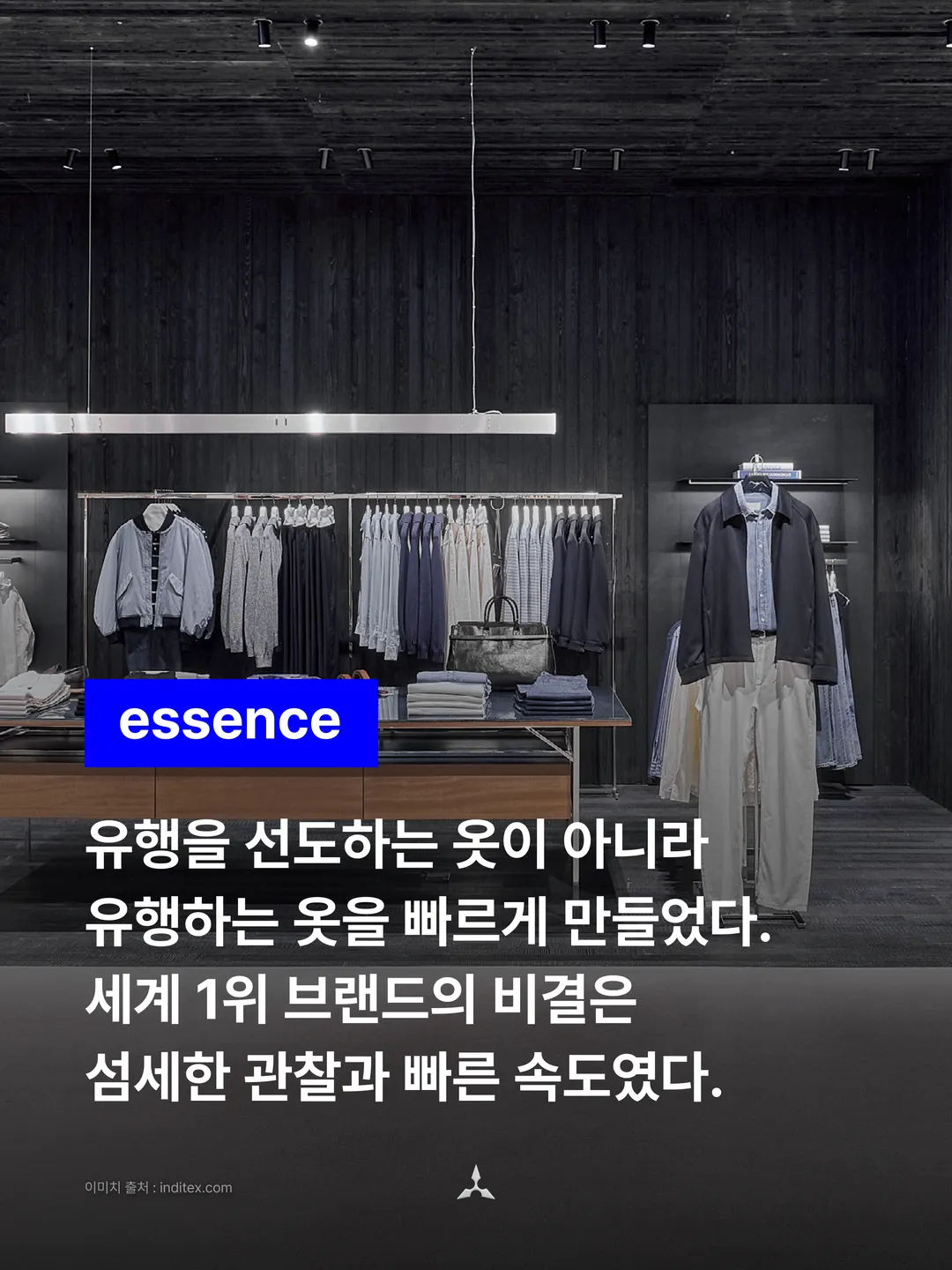
Instead of clothes that lead trends,it made trending clothes, fast.The secret of the world's No. 1 brandwas careful observation and speed.
what's your nonscale?
New clothes arrive at Zara stores twice a week. Has something you saw last week ever been gone this week? 🧥
#fashion #패션 #spa #옷 #옷코디 #가을옷 #쇼핑 #백화점 #가을코디 #자라 #zara #세일 · Where it happened: 라코루냐
11 references · photo credits
- Modaes, “Zara Turns 50: The Story Behind Inditex’s Fashion Revolution” (2025)
- Ara, “Fifty years of Zara, the fashion juggernaut” (2025)
- Britannica Money, “Amancio Ortega”
- South China Morning Post, “How Zara’s low-key founder Amancio Ortega makes and spends his billions” (2023)
- Advergize, “Zara Business Model: How Fast Fashion’s Pioneer Stays Ahead” (2026)
- Advergize, “Zara Marketing Mix: How the 4Ps Power Fast Fashion” (2026)
- Meritshot, “Zara Case Study” (2024)
- Stratrix, “Zara’s Flywheel: Twice-Weekly Trucks, 0.3% Ad Spend, and €38.6 Billion in Revenue” (2026)
- Ara, “Inditex achieves record profits in 2025, exceeding 6 billion euros” (2026)
- Ara, “Amancio Ortega is once again one of the 10 richest people in the world, according to ‘Forbes’” (2026)
- Young Urban Project, “Zara Case Study 2026: The Fast Fashion Giant’s Winning Strategy” (2026)
Photo credits · 01·02·03·04·05·06·07·08·09·10·11·12 inditex.com